


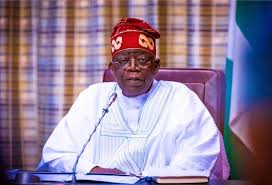
Introduction: A Mandate at Midpoint
On May 29, 2025, President Bola Ahmed Tinubu completed two years as Nigeria’s leader—a period marked by sweeping policy decisions, economic turbulence, political recalibrations, and intensified public scrutiny. Sworn in amid post-election tensions and economic uncertainty, Tinubu’s administration came in on the promise of “ Renewed Hope .” Two years on, Nigerians are asking: has that hope been delivered or dashed?
This critical review assesses the performance of President Tinubu’s government across key sectors, examines public sentiment devoid of propaganda, and projects the political and economic future of Nigeria heading into 2027.
The Economic Scorecard: Gains, Gaps, and Growing Pains
Inflation & Cost of Living:
Inflation remains stubbornly high at over 33% as of April 2025 (NBS, 2025), with food inflation surpassing 40%. The removal of fuel subsidies and the floating of the naira—both of which Tinubu implemented within his first month—triggered an economic shock that has yet to stabilize.
Currency & Monetary Policy:
The naira has weakened substantially against the dollar, averaging ₦1,600–₦1,800/$ in the official market, exacerbating import costs and eroding consumer power. The Central Bank of Nigeria, under new leadership, has struggled to stem volatility despite aggressive interest rate hikes.
Poverty & Unemployment:
Nigeria’s multidimensional poverty rate, already alarming at 63% in 2022, has worsened. The World Bank estimated in early 2025 that over 104 million Nigerians live below the poverty line, up from 89 million in 2023.
Debt & Fiscal Policy:
Public debt has ballooned to over ₦100 trillion, with debt servicing consuming over 60% of government revenue. Though Tinubu launched aggressive tax reforms via the Presidential Committee on Fiscal Policy and Tax Reforms, revenue generation remains slow.
Sectoral Review: Promises vs. Performance
Energy and Power:
Despite ambitious targets to boost generation and privatize transmission, grid collapses persist. The Siemens deal initiated under Buhari has stalled, and citizens still rely on generators as the mainstay of power supply.
Agriculture :
Tinubu pledged food self-sufficiency, yet food scarcity has worsened. Insecurity in the North, floods in the Middle Belt, and policy inconsistencies have crippled large-scale production. Prices of staples like rice, yam, and tomatoes have quadrupled since 2023.
Education :
The Student Loan Act of 2023 was hailed as revolutionary but remains largely symbolic due to bureaucratic delays and funding challenges. Public universities are frequently shut due to underfunding and industrial actions.
Healthcare :
Healthcare workers continue to migrate en masse. While some infrastructural upgrades have occurred in federal hospitals, the lack of universal health insurance and dilapidated primary care centers leave millions vulnerable.
Security :
Banditry, kidnapping, and insurgency continue unabated. Despite increased military budgets and a renewed push in the Northeast and North Central, the security architecture remains reactive and overstretched.
Infrastructure :
The Lagos-Calabar coastal highway project began amid controversy over funding transparency and displacement concerns. However, major transport infrastructure projects, including rail and roads, remain underfunded or abandoned.
Foreign Policy: Between BRICS and ECOWAS
Tinubu’s foreign policy has oscillated between ambition and uncertainty. His push for Nigeria to join BRICS gained momentum in 2024, but critics argue it lacks a coherent geopolitical strategy.
His aggressive role in suspending Niger’s junta-led regime from ECOWAS in 2023 drew applause regionally but also raised questions about overreach. Foreign direct investment remains low, as investors await signs of real stability and legal certainty.
Public Sentiment: Between Resilience and Regret
Mainstream Media :
Newspapers like The Guardian and Daily Trust have criticized the rising cost of governance and the opacity around key contracts. Investigative reports on failed palliative distribution have gone viral, highlighting implementation failures.
Social Media Trends :
Hashtags like #TinubuMustGo, #EndHardship, and #RenewedSuffering trend periodically, especially after economic announcements. Many youths feel disillusioned, citing broken promises on employment and cost of living.
Expert Opinions
Afrobarometer survey showed that only 27% of Nigerians “strongly approve” of Tinubu’s performance, compared to 49% in June 2023. Political analysts like Jide Ojo and Chidi Odinkalu have warned that Tinubu’s government is “technocratic in speech, but transactional in practice.”
2027: Will Tinubu Win Again?
If elections were held today under truly free and fair conditions, Tinubu’s chances of securing a second term would be precarious. While he retains control of the APC and significant state machinery, his popularity among ordinary Nigerians is low. A fragmented opposition may help him, but a united ticket like the PDP-LP coalition floated by some insiders could threaten his bid.
The Road Ahead: What Future for Nigeria?
Nigeria’s political future hinges on whether Tinubu can reinvent his regime in the second half of his term. Without structural reforms to tackle corruption, economic exclusion, and elite privilege, the country risks deeper instability.
Economically, the country faces stagflation—rising prices and stagnant growth. Without a social safety net or mass employment schemes, Nigeria’s youth bulge could become a destabilizing force.
Reform or Regression? The Matrix Explained
For Tinubu’s Re-Election:
Control of ruling party machinery
Entrenched state power and incumbency
Ongoing infrastructure projects (e.g. Lagos-Calabar Highway)
Against Tinubu’s Re-Election:
Harsh economic realities for average citizens
Poor security outcomes
Rising youth disillusionment and brain drain
Civil society resistance and global scrutiny
Solutions: Toward a Functional Republic
Economic Equity: Introduce a living wage policy, expand conditional cash transfers, and lower barriers for small business growth.
Security Reform: Decentralize policing and invest in community intelligence frameworks.
Education & Healthcare : Declare national emergencies in both sectors, with transparent funding and timelines.
Political Accountability: Reinforce judicial independence and strengthen whistleblower protection laws.
Energy Roadmap: Transition to renewable microgrids for rural areas while privatizing power supply under strict regulatory compliance.
Conclusion: A Nation at a Crossroads
President Tinubu’s two years in office have been defined more by bold moves than by measurable progress. His policies have been sweeping, but often lacking in consultation and execution. As Nigeria approaches 2027, the challenge remains whether his government can deliver inclusive development—or if “Renewed Hope” will go the way of other political slogans: forgotten, discredited, and discarded.
Written by Dr Umar Osabo, a political and economic analyst. He can be reached umarmosabo@gmail.com
Leave a Reply