


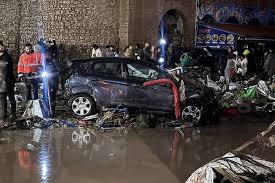
At least 37 people were killed in flash floods triggered by torrential rains on Sunday in Morocco’s Atlantic coastal province of Safi, 330 kilometres (205 miles) south of the capital Rabat, Morocco’s state-run 2M TV reported on Monday.
Fourteen people were receiving medical care at Mohammed V hospital in the town after the floods and two of them are in intensive care, it added, citing local authorities.
One hour of heavy rain was enough to flood homes and shops in the old town of Safi, sweeping away cars and cutting off many roads in surrounding areas as rescue efforts continued, it reported.
Morocco is experiencing heavy rain and snowfall in the Atlas Mountains following seven years of drought that emptied some of its main reservoirs. Sunday’s flooding in Safi is said to be the deadliest such disaster in at least a decade.
Officials warned residents to remain vigilant as weather conditions continue to threaten vulnerable areas. Emergency teams are on high alert to respond to further flooding risks.
Schools have been closed for at least three days and mud and debris clog the streets.
At least 70 homes and businesses in the historic town center were flooded and 55-year-old shopkeeper Abdelkader Mezraoui said the retail economy had been devastated.
“Jewelry store owners have lost all their stock … and the same goes for clothing store owners,” he said, calling for official compensation to save businesses.
Late Sunday, the rescuer Azzedine Kattane had told AFP about the strong “psychological impact of the tragedy” in light of the large number of victims.
As the waters receded, they left behind a landscape of mud and overturned cars. Onlookers watched Civil Protection units and local residents working to clear debris.
Morocco is struggling with a severe drought for the seventh consecutive year, and last year was the North African kingdom’s hottest on record.
Climate change has made storms more intense, because a warmer atmosphere holds more moisture and warmer seas can turbocharge weather systems.
Flash floods killed hundreds in Morocco in 1995 and scores in 2002.