


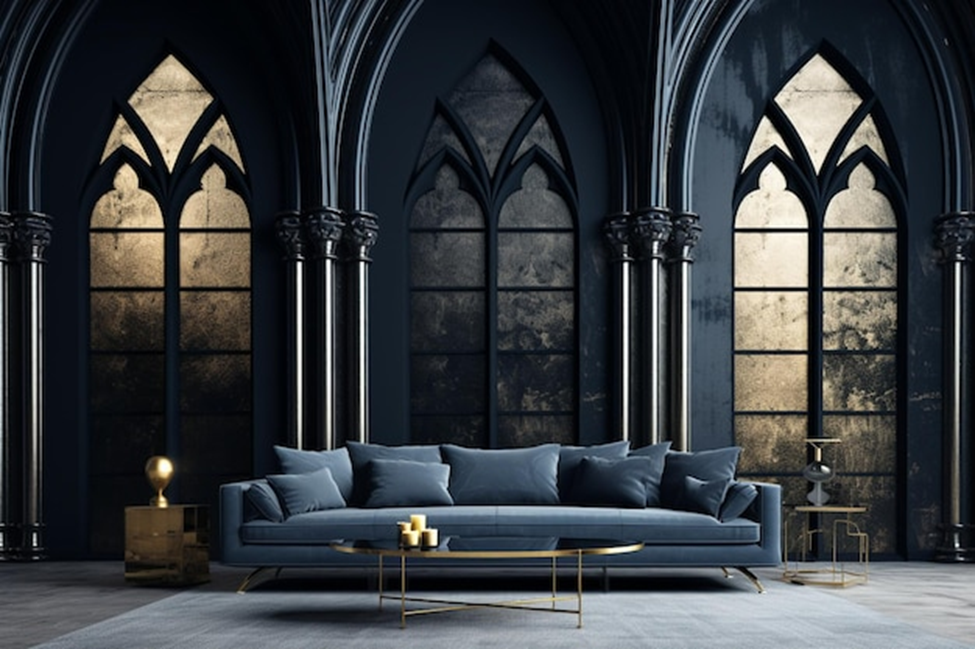
Gothic Revival, a 19th-century design movement inspired by medieval Gothic architecture, brings a moody elegance and a sense of romantic mystery into interior spaces. Originating in England and spreading across Europe and America, this style was popularized in churches and castles, but today, it’s finding its way into modern homes with dramatic flair and historical depth.
KEY ELEMENT OF GOTHIC REVIVAL DECOR
- ARCHITECTURAL DETAILS
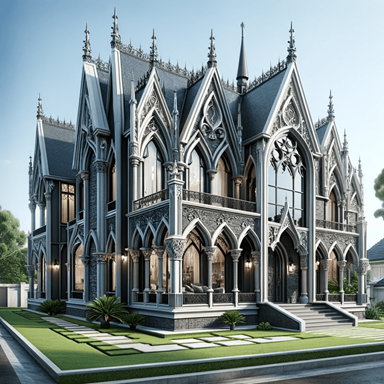
Pointed arches, ribbed vaults, and intricate tracery define Gothic Revival interiors. These details can appear in windows, doorways, mirrors, and furniture accents. High, vaulted ceilings or faux ceiling beams also enhance the architectural drama.
- DARK, RICH COLOR PALETTE
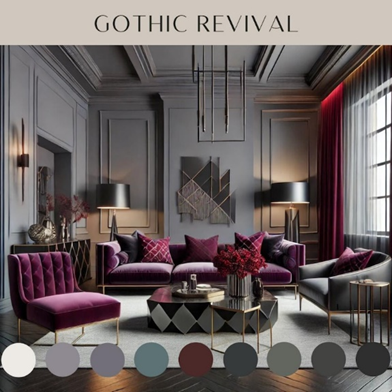
The style embraces deep hues, think burgundy, forest green, navy blue, charcoal, and black, often paired with gold or bronze accents for a luxurious contrast.
- STAINED GLASS & ORNATE WINDOWS
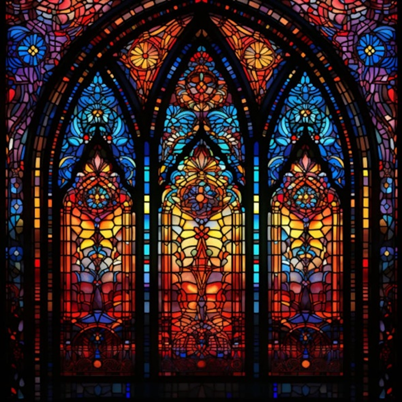
Stained glass panels and windows with Gothic patterns create a spiritual and artistic atmosphere, allowing light to filter in with a colorful, ethereal glow.
- VINTAGE & HEAVY FURNITURE
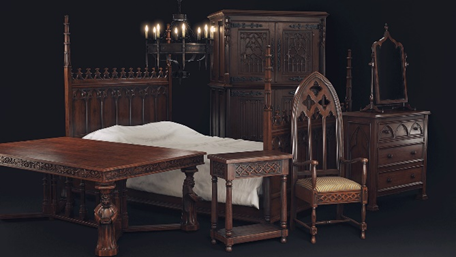
Gothic Revival furniture is solid, often crafted from dark woods like mahogany or oak. Look for carved headboards, throne-like chairs, and elaborate cabinetry that reflect medieval craftsmanship.
- TEXTILES & ACCESSORIES
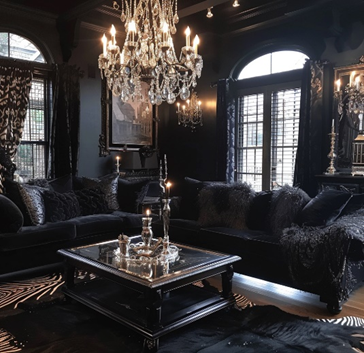
Embroidered tapestries, damask drapes, and velvet cushions add richness. Candlesticks, wrought iron chandeliers, gargoyle figures, and antique books help complete the Gothic ambience.
MODERN GOTHIC TOUCHES
Contemporary homeowners are adapting Gothic Revival in subtle, stylish ways—adding arched mirrors, dark feature walls, or vintage chandeliers to modern interiors. This blend of old and new gives personality and depth to otherwise minimal spaces.
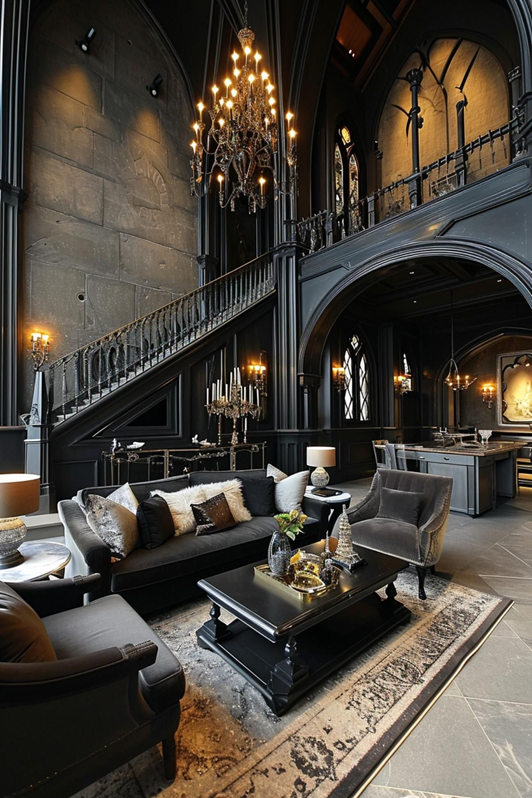
Gothic Revival décor is bold, romantic, and unapologetically dramatic. It’s a style that tells a story, of history, mystery, and beauty. Perfect for those who dare to be different, it transforms a home into a cathedral of personal expression.
BY-Adenola Eniola