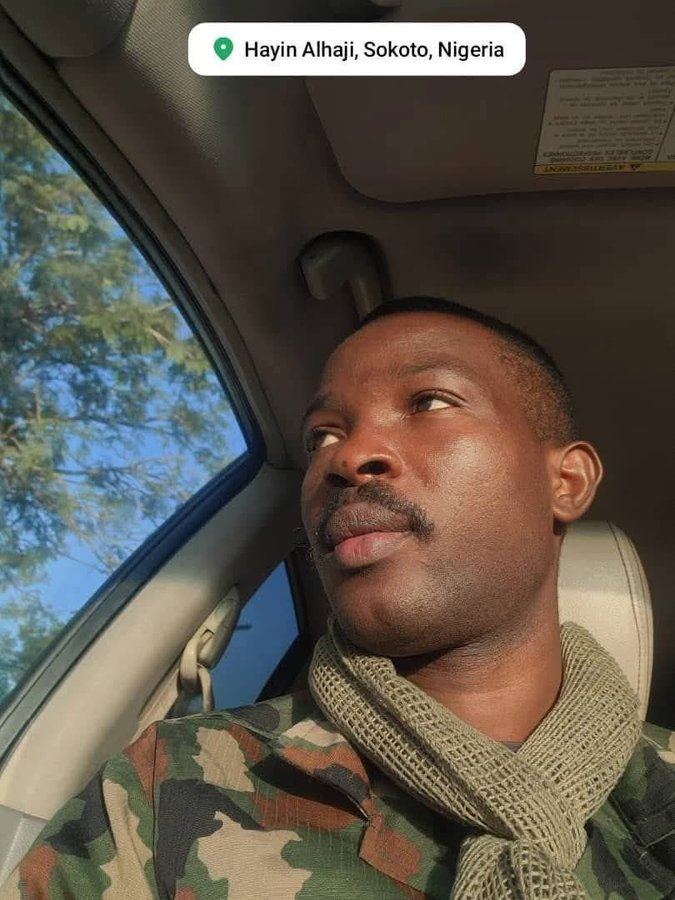
Kolawole Stephen: “I was in Sokoto today, and after a gruesome hours later, I found myself already in Abuja.
“We moved in a convoy of only two Hilux vehicles, each one mounted with an AA gun. When we got to Kwangila Road and stopped for a moment, I looked around and saw a sea of vehicles pulling over with us. At first, I did not understand it.
“So I asked.
“That was when someone told me they had been following us since. They were using us as their protection, hoping that our presence alone meant safety.
“Eetiz zat bad…” a man said quietly in a diluted English, the kind of tone that carries both fear and acceptance.
“Some of the passengers sat back in the vehicle, looking forlorn and worried.
“I walked to some of the drivers and spoke to them. I told them not to stay too close. I told them to give us enough room, enough space to react, enough distance for us to act as a buffer between them and whatever danger came.
“They nodded. Some smiled weakly.
“When we continued the journey, I watched them from the wing mirror. All those vehicles… all those families… trailing behind us like we were the last thin line between them and death.
“I shook my head. Not out of anger. Not out of frustration.
“But because it reminded me again of the painful truth we already live with in this country.
“People now follow soldiers the way someone grips a lifeline.
“And that is not how it should be.
✍️
“I cannot save everyone, but these ones… for the time we are together, I promise with every fiber of me, no threat will reach them while I can fight.”
Credit: Kolawole Stephen is a Nigerian soldier and writer whose first-class frontline perspective shapes his words. In his writing, the silence of the battlefield becomes language, and the unspoken struggles of war transform into vivid, haunting literary imagery.