Aare Amerijoye DOT.B,
The All Progressives Congress has built what they believe is an indestructible fortress: 29 governors and the full weight of federal might. They stand behind these walls, counting chairs instead of listening to cries, tallying offices while the nation starves. They believe this is a permanent empire.
But outside their gates, a flood is rising,not of water, but of raw, undiluted human anguish. It swells in every village, every ward, every local government. The question they dare not ask, and the truth we will now proclaim, is this: What happens when ten thousand local grievances become one national roar? What happens when every personal pain, from a mother’s empty pot in Makurdi to a graduate’s dead phone in Asaba, fuses into a single political detonation?
The APC’s fatal assumption is that suffering is localised and can be managed with pocket change and empty promises. Some of their members notion of blueprint of ₦20,000-per-vote inducement is the ultimate proof. After gutting the economy, they believe they can rent silence from their victims. This is not strategy; it is a suicide note. For you cannot bribe a people who have already connected their individual suffering to your collective failure.
A fortress, after all, is only as strong as the loyalty of those trapped within its shadow. Let us first autopsy their previous “invincibility.” In 2023, their presidential candidate was rejected in states governed by their own party’s sitting governors. This was not a minor tremor. It was the ground shifting beneath their feet.
They lost the presidential vote in these APC-governed states (as reflected in officially declared 2023 presidential results):
To Atiku:
Gombe State (North East)
Yobe State (North East)
Kebbi State (North West)
Zamfara State (North West)
Kaduna State (North West)
Katsina State (North West)
To Obi:
Lagos State (South West)
Imo State (South East)
Ebonyi State (South East)
Plateau State (North Central)
Nasarawa State (North Central)
Cross River State (South South)
Lagos, their crown jewel, chose another. Kaduna and Katsina, their northern citadels, turned away. The so-called “power of incumbency” was exposed as a myth. The wall had already cracked. Since then, they have not repaired it; they have poured gasoline on the fire of public suffering. The cracks of 2023 are now canyons in 2024, waiting to swallow them whole in 2027.
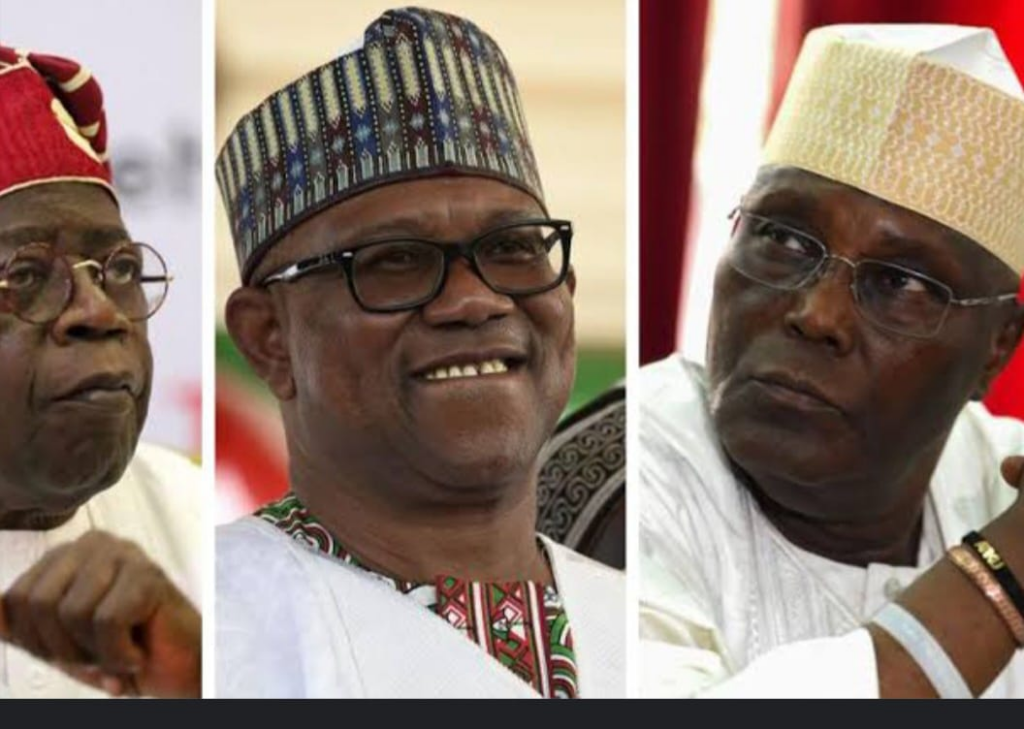
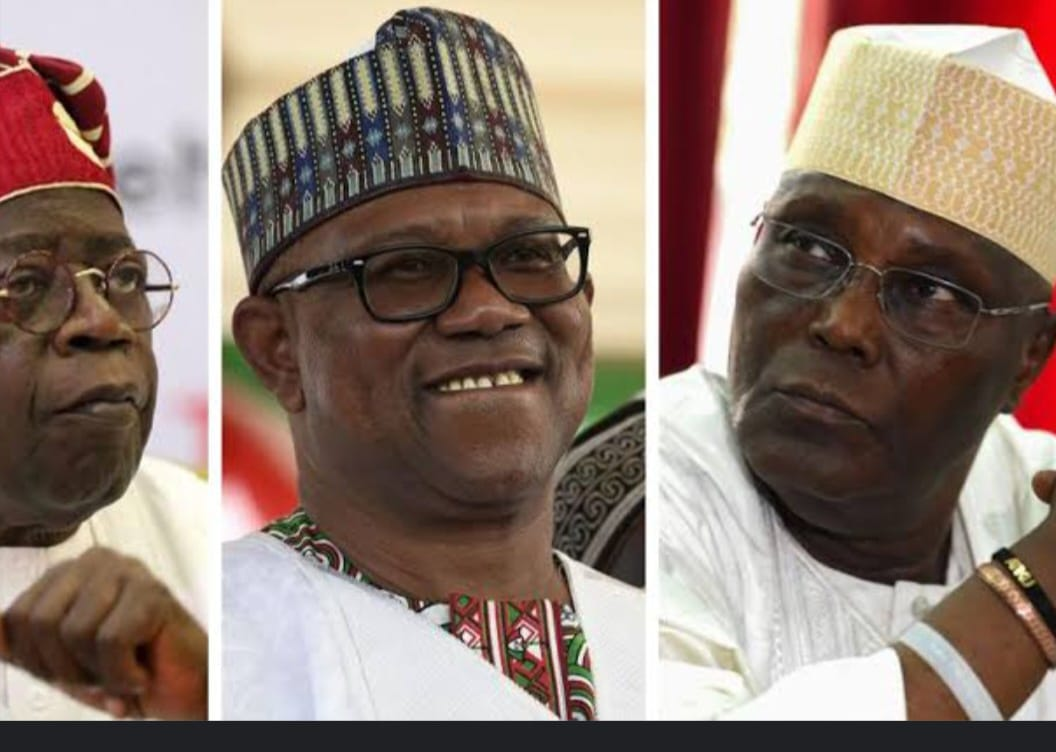
And the rebellion was even broader, reaching deep into the territories of other parties. The wave of rejection was not confined to APC states. The Labour Party’s Peter Obi secured historic wins in states governed by other parties, proving that the demand for change was a national epidemic, not a local outbreak.
States won by Peter Obi (11 States + FCT) included victories in states governed by other parties:
With PDP Governors:
Delta State (South South)
Edo State (South South)
Abia State (South East)
Enugu State (South East)
With APGA Governor:
Anambra State (South East)
His other wins comprised Lagos, Imo, Ebonyi, Plateau, Nasarawa, and Cross River—states already listed among APC-governed defeats—alongside the Federal Capital Territory (North Central).
Similarly, the PDP’s Atiku Abubakar claimed victories that cut across diverse political territories, further fragmenting any illusion of a national consensus for the ruling party.
States won by Atiku Abubakar (12 States, as declared in the 2023 presidential election):
Adamawa State (North East) [Atiku’s home state]
Sokoto State (North West)
Bayelsa State (South South)
Osun State (South West)
Akwa Ibom State(South South)
Bauchi State (North East)
Gombe State (North East)
Yobe State (North East)
Kebbi State (North West)
Zamfara State (North West)
Kaduna State (North West)
Katsina State (North West)
This is where their empire meets its end, where local grievances transform from whispers into a war cry. Local pain is not just a complaint; it is the raw fuel for revolution. Our sacred task is to become the engineers who transform this fuel into an unstoppable engine of change. We must connect the dots between isolated despair and collective power.
We begin by building the narrative bridge from “my problem” to “our war.” We must forge a story so compelling it becomes the people’s truth: “The hunger in your home was designed in Abuja. The darkness on your street was legislated in the National Assembly. The ₦20,000 they may offer for a vote is the price of your continued slavery.” The ADC must be the megaphone that turns the mother’s sigh in Makurdi into a slogan heard in Port Harcourt, that the artisan’s struggle in Abeokuta is the same war as the teacher’s in Sokoto. A common enemy forges a common front.
Yet rage without structure is just sound. This leads us to the organisational grid that turns fury into formation. We must build a nationwide neural network, not a top-down pyramid, but a living web connecting every ward, every local government area. The ADC’s local chapter becomes the community’s headquarters: documenting grievances, providing aid, and Organising action. When pensions are unpaid in Calabar, our grid ensures it becomes a rallying cry in Kano. We turn passive suffering into active, organised, and shared resistance.
From there, we need the symbolic catalyst that turns incident into insurrection. Every local tragedy must be amplified into a national symbol. A child lost to hunger in Borno becomes “Malnutrition’s Daughter,” the face of federal neglect. The reported ₦20,000 inducement in the coming election becomes the universal emblem of contempt. We will create a shared gallery of martyrdom and insult that makes every Nigerian feel the pain of the other as their own.
The final, decisive step is activating the electoral algorithm to convert protest into presidency. This is the machinery of change: grievance mapping to target specific pains in every polling unit; the “justice swap” that builds alliances across communities based on shared needs; and mandate armor,a parallel system of protection with monitors, lawyers, and mobilized citizens to shield the people’s verdict from theft at the collation center.
In this landscape, only one vehicle is built for such a journey. The PDP is a museum of self inflicted injuries and balkanization by impostors. The Labour Party is entangled in the very old politics it once opposed. Only the AFRICAN DEMOCRATIC CONGRESS (ADC) has the purity, agility, and moral clarity to execute this translation. We are untainted. We carry no baggage of fuel queues or a collapsed naira. We can stand and say, “We did not break this nation, but we are wholly dedicated to rebuilding it.” We are the political vehicle built for this precise historical moment: to receive the scattered, desperate energy of a betrayed people and focus it into a laser beam capable of cutting through fortress walls.
Let them keep their 29 governors. Let them stack their billions in inducements. A fortress built upon the graves of hope is doomed to become the tomb of its builders. 2027 will not be an election. It will be a national exorcism. It will be the moment the flood of local suffering,now channeled, focused, and united,crashes over their walls with the force of a people’s will. The insult of ₦20,000 will not buy votes; it will buy them an avalanche.
The ADC is the architect of this convergence. We are the translators of pain into power, the synthesizers of local cries into a national demand. We stand ready to receive the mandate not from political elites, but from the sovereign people who have finally linked arms, connected their struggles, and declared with one earth-shaking voice:
OUR SUFFERING IS YOUR PROBLEM. OUR UNITY IS YOUR END. ENOUGH!
Aare Amerijoye DOT.B,
Director General,
The Narrative Force.