


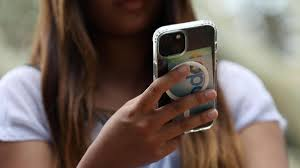
France and Britain are considering following Australia’s lead by banning children and some teenagers from using social media.
The move comes amid a fierce debate among experts over the effectiveness of such a ban in tackling deteriorating youth mental health.
Australia last month became the first nation to prohibit people under 16 from using platforms like Instagram, Facebook, TikTok and YouTube.
France is currently debating bills for a similar ban for under-15s, including one championed by President Emmanuel Macron.
The Guardian reported that American psychologist Jonathan Haidt, a supporter of the Australian ban, had been asked to speak to UK government officials.
Haidt argued in his bestselling 2024 book that too much screen time was rewiring children’s brains and “causing an epidemic of mental illness”.
His book has proven controversial in academic circles, with Canadian psychologist Candice Odgers writing that the “scary story” was “not supported by science”.
One main area of disagreement is determining exactly how much effect using social media has on young people’s mental health.
Michael Noetel, a researcher at the University of Queensland, told reporters there is “plenty of evidence” that social media does harm to teens.
“My read is that Haidt is more right than his harshest critics admit, and less right than his book implies,” Noetel said.
France’s public health watchdog, ANSES, said last week that social media contributes to declining adolescent mental health, particularly among girls, though it is not the sole cause.
Research published in Psychological Bulletin reviewing more than 100 global studies found excessive screen time, including social media use and video gaming, is linked to emotional distress among young people, which can in turn increase reliance on screens.
Ben Singh from the University of Adelaide tracked more than 100,000 young Australians over three years for a study published in JAMA Pediatrics.
The study found the young people with the worst wellbeing were those who used social media heavily or not at all.
“The findings suggest that both excessive restriction and excessive use can be problematic,” Singh told reporters.
French psychiatrist Serge Tisseron warned that “social media is appallingly toxic”.
But he feared a ban would easily be overcome by tech-savvy teens, while absolving parents of responsibility.
Another option could be to wait and see how the Australian experiment pans out.
“Within a year, we should know much more about how effective the Australian social media ban has been,” said Cambridge University researcher Amy Orben.
Last week, Australia’s online safety watchdog said tech companies have already blocked 4.7 million accounts for under 16s.