


Gas is a normal part of digestion, yet it can be uncomfortable, embarrassing, and sometimes painful. Almost everyone experiences gas at some point, but frequent or severe gas may signal an underlying digestive issue. Understanding what causes gas and how to manage it can help you stay comfortable and healthy.
WHAT IS GAS?
Gas forms in the digestive tract when food is broken down or when air is swallowed during eating and drinking. It collects mainly in the stomach and intestines and leaves the body through burping or passing wind. While this process is natural, excess gas can cause bloating, pressure, cramps, and abdominal discomfort.
COMMON CAUSES OF GAS
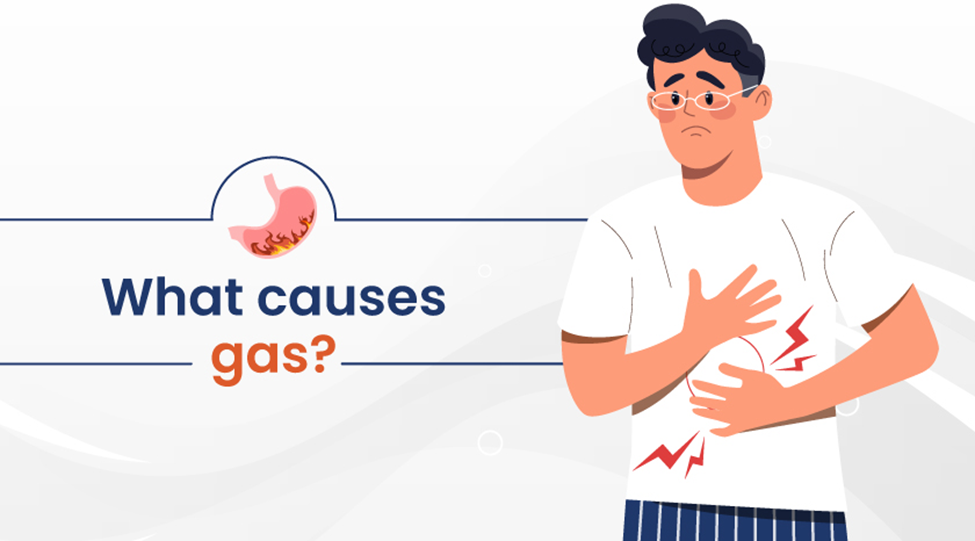
1. SWALLOWING AIR (Aerophagia)
Eating too quickly, talking while eating, chewing gum, smoking, or drinking carbonated beverages can cause you to swallow excess air.
2. CERTAIN FOODS
Some foods are harder to digest and produce more gas during breakdown, such as:
* Beans and lentils
* Cabbage, broccoli, cauliflower
* Onions and garlic
* Dairy products (especially for people with lactose intolerance)
* Whole grains and high-fiber foods
* Sugary foods and artificial sweeteners
3. FOOD INTOLERANCES
Lactose intolerance, gluten sensitivity, and other food sensitivities can lead to gas, bloating, and diarrhea.
4. DIGESTIVE DISORDERS
Conditions like irritable bowel syndrome (IBS), acid reflux, constipation, and intestinal infections may increase gas production.
5. POOR DIGESTION
Low digestive enzyme levels can prevent food from breaking down properly, leading to fermentation and gas.
SYMPTOMS OF GAS
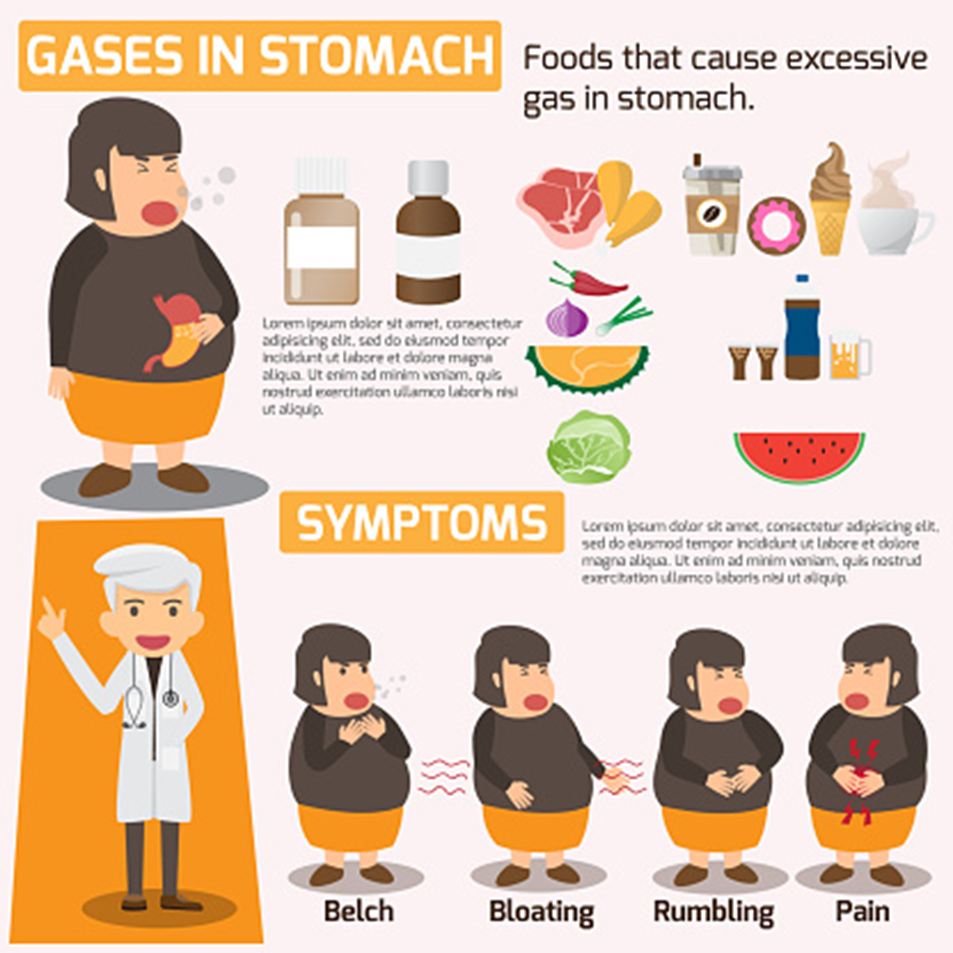
* Abdominal bloating or fullness
* Stomach cramps or pain
* Frequent burping
* Passing gas
* Rumbling sounds in the stomach
* Tightness in the abdomen
Although gas is usually harmless, persistent pain, weight loss, vomiting, or blood in stool should be evaluated by a healthcare professional.
HOW TO REDUCE AND PREVENT GAS
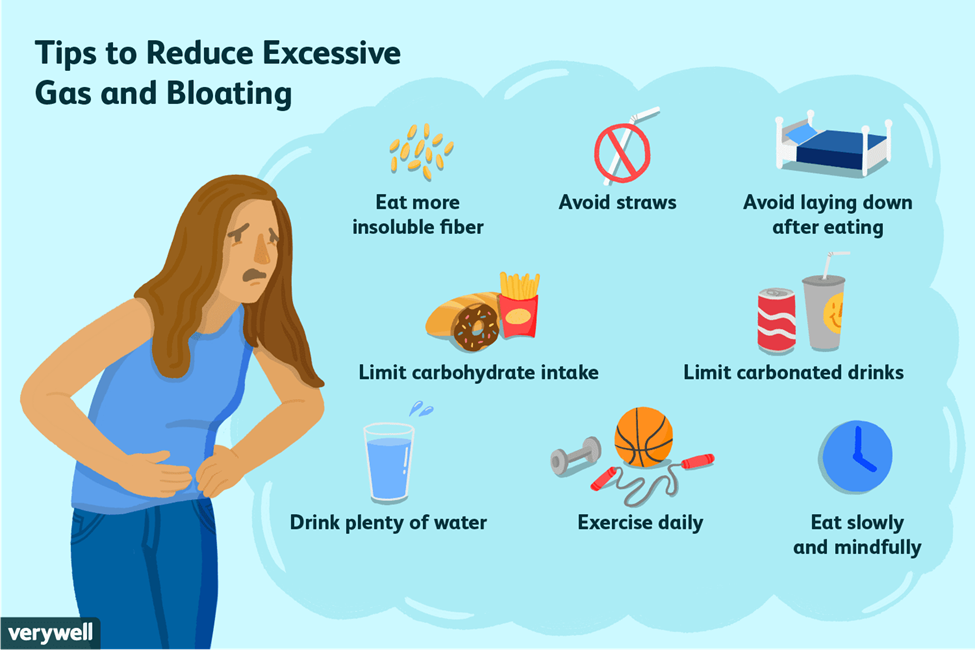
1. Eat Slowly and Mindfully
Chew food thoroughly and avoid rushing meals. This reduces swallowed air and improves digestion.
2. Identify Trigger Foods
Keep a food diary to track which foods cause more gas for you and limit them as needed.
3. Increase Fiber Gradually
Fiber is important for digestion, but adding it too quickly can cause gas. Increase intake slowly and drink plenty of water.
4. Stay Active
Light physical activity, such as walking, helps move gas through the digestive tract and reduces bloating.
5. Avoid Carbonated Drinks
Soda and sparkling water add extra air to your digestive system.
6. Try Natural Remedies
* Warm water or herbal teas (ginger, peppermint, chamomile)
* Gentle abdominal massage
* Probiotics to support healthy gut bacteria
7. Over-the-Counter Options
Products like simethicone or digestive enzymes may help reduce gas, but consult a healthcare provider if symptoms persist.
Seek medical advice if gas is:
* Severe or long-lasting
* Accompanied by unexplained weight loss
* Associated with fever, vomiting, or blood in stool
* Interfering with daily activities
These may indicate a more serious digestive condition.
Gas is a natural digestive process, but excessive gas can affect comfort and quality of life. By understanding your body, choosing foods wisely, eating slowly, and staying active, you can greatly reduce gas and bloating. If symptoms continue or worsen, professional medical guidance is essential for proper diagnosis and treatment.
By: Adenola Eniola.