


In a world where sparkling white teeth are celebrated, Japan once embraced the complete opposite. For nearly a thousand years, blackened teeth known as Ohaguro were considered the height of beauty, elegance, and social status.
Ohaguro dates back as far as the Heian period (794–1185), but it became widespread during the Muromachi and Edo eras. At first, it was a practice of the aristocratic elite nobles, court ladies, and samurai families.
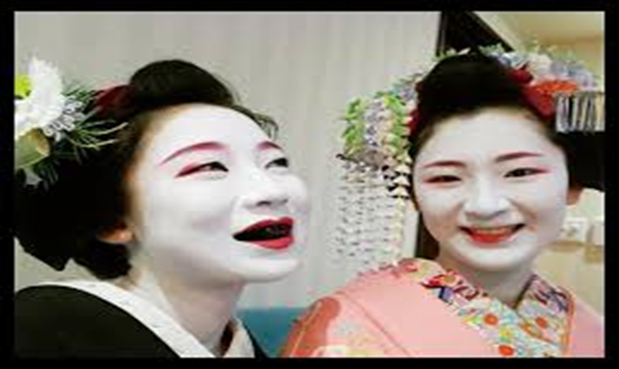
Over time, it evolved into a tradition tied to beauty, adulthood, loyalty, and even marital commitment.
Ohaguro involved coating the teeth with a black dye made from iron filings, vinegar, and tea tannins. The mixture reacted to form a shiny black enamel that women and sometimes men reapplied every few days.
Surprisingly, the dye protected the teeth from decay, making Ohaguro both a beauty practice and a natural dental treatment by acting as a dental sealant.
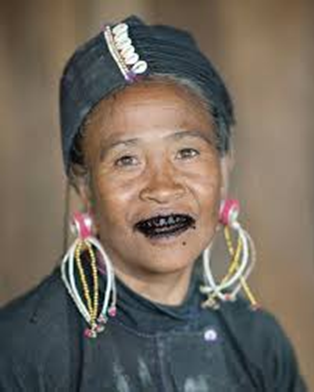
While most people associate Ohaguro with women, many other groups like samurai practiced it, when a samurai dyed his teeth black, it reflected his decision not to serve another lord for the rest of his life.
Geishas and high-ranking courtesans also blackened their teethto enhance their allure and stand out in the entertainment world.In medieval Japan, the darker your teeth, the brighter your future.
Everything changed in the late 19th century during the Meiji Restoration, a period when Japan aggressively adopted Western clothing, education, industrialization, and beauty norms.

White teeth were suddenly seen as “modern,” while Ohaguro was labeled “backward.”
In 1870, the government officially banned Ohaguro for public officials and encouraged the public to drop the tradition.
Slowly, the practice faded away although in very remote areas, it survived into the early 20th century.
Today, you’ll only see it in Kabuki theatre, Period films, and Cultural exhibitions.
By: Idris Olayinka