


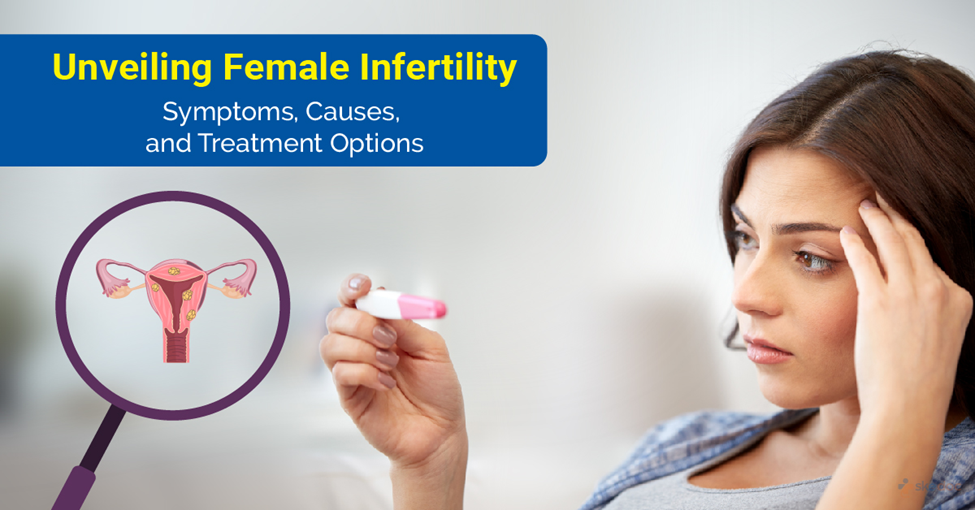
Infertility is a deeply emotional and often misunderstood health issue, especially for women. Female infertility refers to the inability to conceive after a year of regular, unprotected intercourse. It affects millions of women globally and can stem from various medical, hormonal, or lifestyle factors.
COMMON CAUSES OF FEMALE INFERTILITY
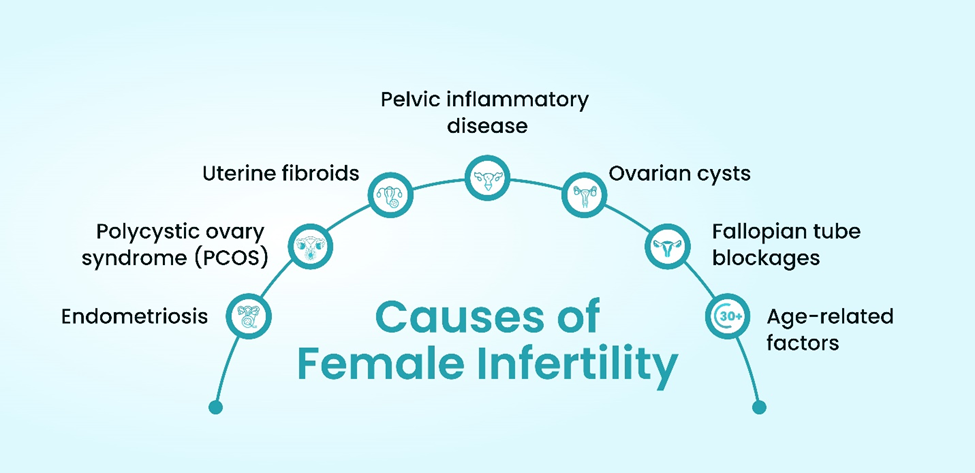
1. OVULATION DISORDERS:
Irregular or absent ovulation due to conditions like Polycystic Ovary Syndrome (PCOS) or hormonal imbalances can hinder egg release.
2. FALLOPIAN TUBE DAMAGE:
Blocked or damaged fallopian tubes, often due to infections like pelvic inflammatory disease, prevent sperm from reaching the egg.
3. ENDOMETRIOSIS:
A condition where tissue similar to the uterine lining grows outside the uterus, affecting reproductive organs.
4. UTERINE OR CERVICAL ISSUES:
Fibroids, polyps, or abnormalities in the uterus can interfere with implantation or pregnancy.
5. AGE AND LIFESTYLE FACTOR:
Fertility naturally declines with age. Smoking, obesity, excessive stress, or poor nutrition can also affect reproductive health.
DIAGNOSIS AND TREATMENT
Doctors use tests like hormone level checks, pelvic ultrasounds, and hysterosalpingography (HSG) to assess fertility issues. Treatment depends on the cause and may include:
– Medication to stimulate ovulation
– Surgery to remove blockages or endometriosis
– Assisted reproductive technologies like IVF (In Vitro Fertilization)
EMOTIONAL SUPPORT AND HOPE
Infertility can take a toll emotionally. Support groups, counseling, and open conversations with partners and healthcare providers are vital. Today, many women find success through medical help, and advances in fertility care continue to bring hope.
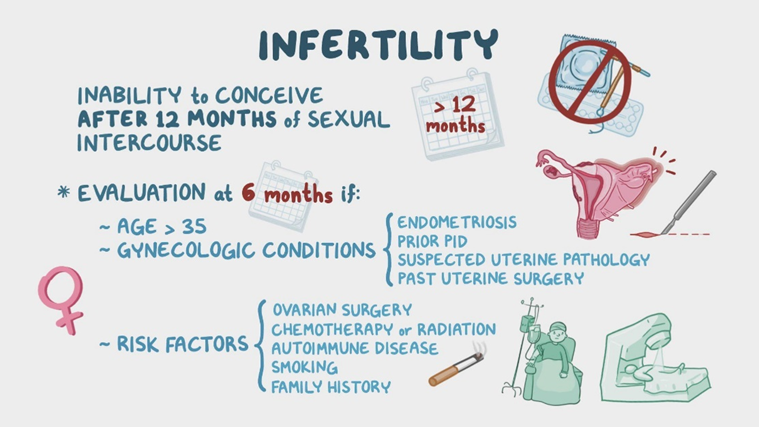
Infertility is not a personal failure. It’s a medical condition that deserves understanding, compassion, and the right care. Early diagnosis and a supportive approach can make a world of difference.
BY-Adenola Eniola.