


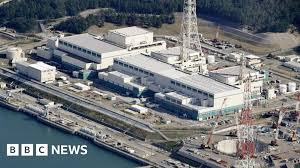
Japan is set to resume operations at the world’s largest nuclear power plant: Kashiwazaki-Kariwa.
The partial restart of the plant got the green light in a vote on Monday by the Niigata local government. Japan has reopened several nuclear facilities as it seeks to reduce emissions, reversing policy 15 years after 54 reactors were shut in the wake of the Fukushima disaster despite public opposition.
Niigata prefecture’s assembly passed a vote of confidence on Governor Hideyo Hanazumi, who backed the restart last month, effectively allowing the plant to begin operations again.
The plant was taken offline when Japan pulled the plug on nuclear power after a colossal earthquake and tsunami sent three reactors at the Fukushima atomic plant into meltdown in 2011.
However, the resource-poor nation now wants to revive atomic energy to reduce its heavy dependence on fossil fuels, achieve carbon neutrality by 2050 and meet growing energy needs from artificial intelligence.
The assembly in Niigata, where Kashiwazaki-Kariwa is located, voted on Monday on a regional extra budget bill, which included a supplementary resolution to endorse the governor’s decision.
“The measure is approved by a majority vote,” the assembly speaker said as most of the 53-seat body stood to express their support.
With that hurdle cleared, Tokyo Electric Power (TEPCO) is expected to turn to Japan’s nuclear regulator to give final permission for a restart.
TEPCO will submit the request to the Nuclear Regulation Authority before the end of the year, Japanese media said.
The company is considering putting one of the seven reactors at Kashiwazaki-Kariwa back online around January 20, according to national broadcaster NHK and the Nikkei business newspaper.
Hanazumi is expected to meet Industry Minister Ryosei Akazawa on Tuesday to convey his support for the plant’s restart, according to local TV station Broadcasting System of Niigata (BSN).
The reactor has already cleared the nation’s nuclear safety standard, and TEPCO was waiting for local communities to give their consent for switching on the facility.
Prime Minister Sanae Takaichi has voiced her support for the use of nuclear power.
Japan is the world’s fifth-largest single-country emitter of carbon dioxide, after China, the United States, India, and Russia, and is heavily dependent on imported fossil fuels.
Japan spent 10.7 trillion yen ($68bn) last year on imported liquefied natural gas and coal, one-10th of its total import costs.
Nuclear power generated about a third of Japan’s electricity before the 2011 quake and tsunami, which killed around 18,000 people, with fossil fuels contributing most of the rest.
TEPCO gradually switched off its nuclear facilities in the wake of the disaster, but 14 reactors, mostly in western and southern regions, have resumed operation under strict safety standards.
Fourteen of the 33 nuclear plants that remain operable in the country have been resurrected. However, the first reactor alone could boost electricity supply to the Tokyo area by 2 percent, Japan’s Ministry of Economy, Trade and Industry has estimated.