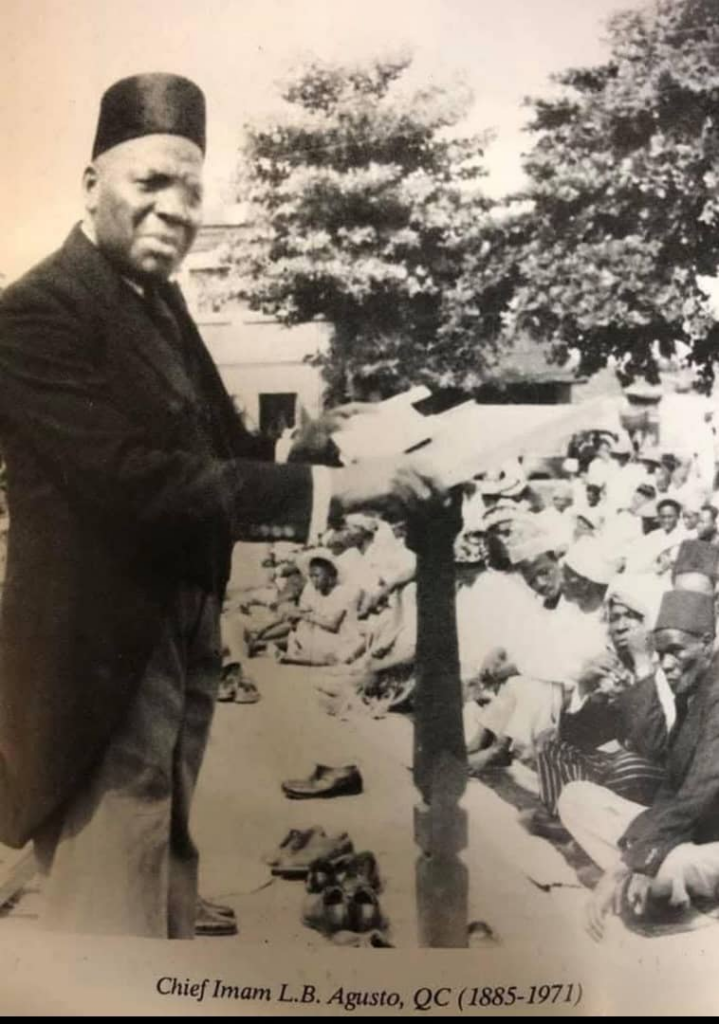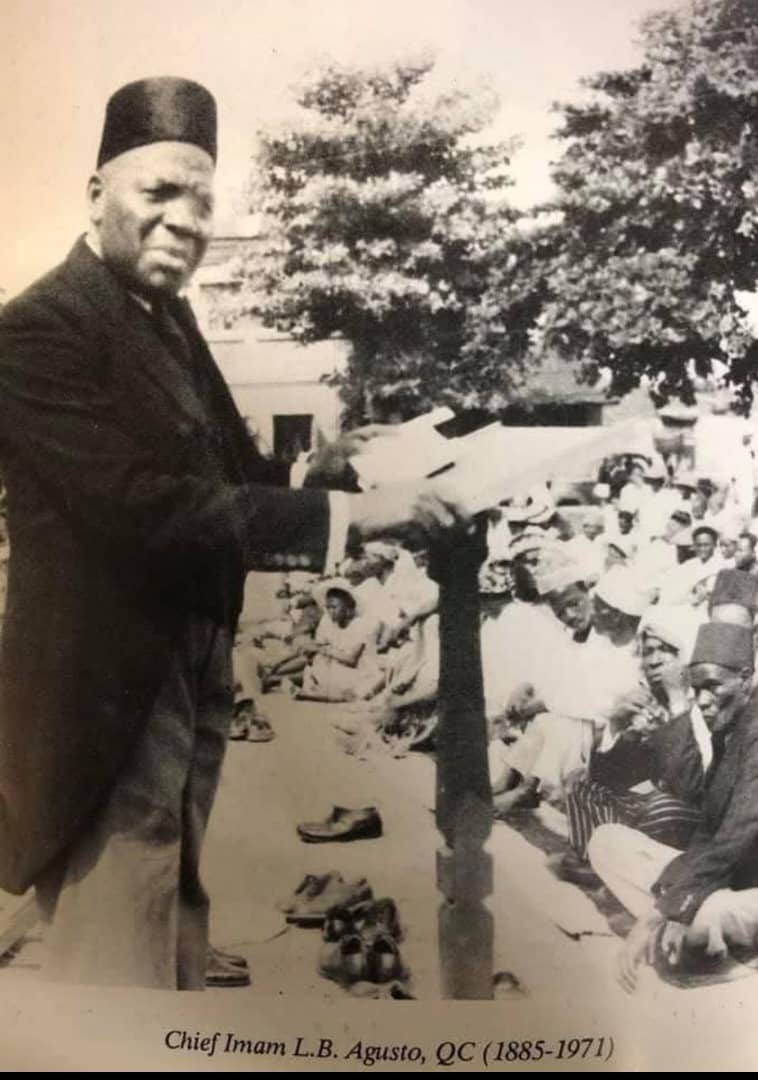
Lawal Basil Agusto, QC (1885–1971) occupies a distinctive place in Nigerian legal and religious history. He is widely regarded by historians as the first Muslim Nigerian to qualify and practise as a lawyer, at a time when access to Western legal education was extremely limited for Africans, particularly Muslims.
Early Life and Education
Lawal Basil Agusto was born in 1885 in Lagos during the colonial era. He travelled to the United Kingdom, where he studied law and was called to the Bar in England. After completing his legal training, he returned to Nigeria in 1924, establishing a successful legal practice in Lagos.
His return marked a turning point, as he bridged Islamic scholarship and Western legal practice, challenging the notion that modern law and Islam were incompatible.
Legal Career and Recognition
Agusto built a respected legal career in colonial Nigeria, practising primarily in Lagos. His professional excellence was formally recognised in 1959, when he was conferred with the prestigious title of Queen’s Counsel (QC)—one of the highest legal honours within the British Commonwealth.
This distinction placed him among Nigeria’s most elite legal minds of his era.
Religious Leadership and Islamic Reform
Beyond law, Agusto was deeply committed to Islamic organisation and reform in Nigeria. He was initially affiliated with the Ahmadiyya Muslim community, which played a notable role in early Muslim education and reform movements in West Africa.
Later, he went on to establish the Islamic Society of Nigeria, formally known as Jama’at Ul-Islamiyya, where he served as its first President. The society sought to promote Islamic unity, moral discipline, and structured religious administration within a rapidly modernising Nigerian society.
Because of his religious stature, Agusto was also widely recognised as Chief Imam L.B. Agusto, a title reflecting both leadership and respect rather than clerical ordination in the Christian sense.
Death and Legacy
Lawal Basil Agusto died in 1971, leaving behind a legacy that spans:
Nigerian legal history
Islamic reform and organisation
Muslim participation in Western education and governance
He remains a symbol of intellectual synthesis, demonstrating that faith, modern education, and civic responsibility could coexist in colonial and post-colonial Nigeria.
Sources
Nigerian Legal History Records
Encyclopaedia Britannica (Herbert Macaulay profile)
National Archives of Nigeria
Islamic Society of Nigeria historical publications