


The Eyo Festival, also known as Adamu Orisha Play, is a traditional Yoruba ceremony indigenous to Lagos State. It is held to honor the life and passing of an Oba (king) or a highly respected chief, and sometimes to mark significant state events.
Unlike other festivals built around music and celebration, Eyo is a rite of passage, marking transition from life to death, from reign to legacy.
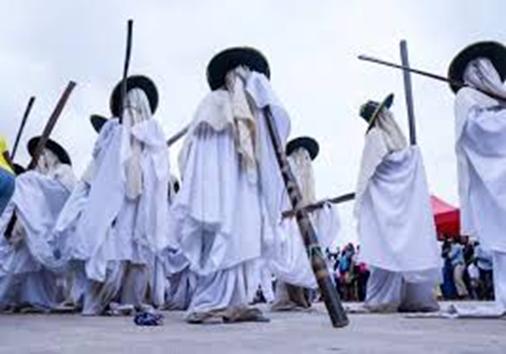
The festival’s most striking feature is the Eyo masquerade, known as Agogoro Eyo. Each Eyo figure appears dressed in flowing white robes, wide hats (Aga), and carries a long wooden staff called Opambata. Their faces remain covered, reinforcing the belief that Eyos are not ordinary humans, but spiritual messengers.
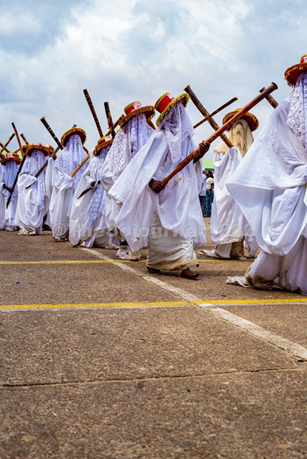
The festival begins with sacred rituals at night in traditional shrines. By morning, thousands of Eyos emerge and move through historic Lagos routes from Idumota to Tafawa Balewa Square(TBS). At TBS, they pay homage to the Oba, dance rhythmically, and complete the spiritual journey.
Its popularity stretches beyond the shores of Nigeria, it can be concluded that the Eyo masquerade itself represents Lagos. The unique feature of this event is its infrequent staging, the Eyo does not hold on an annual basis like the popular Lagos carnivals of Olowogbowo, Oko-Faji etc. There have been times in the past when for 21 years, the event did not hold, also there have been years when Eyo was staged, three, four and five times in a single year: 1903, 1906 and 1909 respectively.
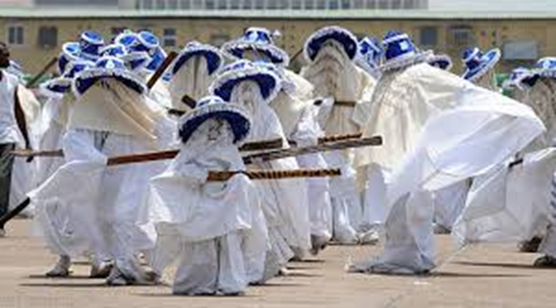
Expectations of those who are yet to witness the Adamu Orisa Play might be limited to the already familiar masquerades with an attire of different colours and whips but the Eyo masquerade is by no means similar; the flowing white poplin (Aropale), the decorated hat (Ape/Aga) which differentiates one Eyo group from the others and the Eyo staff (Opa Eyo) used to extend the blessings of the Adamu Orisa Play by touching an individual, is an inimitable feature and a beauty to behold.
Each Eyo Group has a distinct hat color, signifying hierarchy: Adimu (Black), Laba (Red), Oniko (Yellow), Ologede (Green), and Agere (Purple).
According to history, Adamu Orisa originated from Benin. Eyo festival has had a lot of impact on tourism right from the time the Portuguese first set foot on Eko and christened it Lagos, the Island has attracted foreigners on account of its many advantages as a seaport.
History has it that Eyo Orisa Oniko was next to Eyo Orisa Adimu in rank but that Oba Adele, during his reign asked for Okanlabato to assume the second position and it has been like that since then., According to legend, Eyo Okanlaba has no Orisa but ‘Laba (symbolic Bag), which is the property of the reigning Oba. The Okanlaba’s second position in the Orisa group has remained like that and will be so forever. Meanwhile, each “Orisa of Eyo” has traditional functions which must perform as directed by the Supreme Head of all the Orisas, “Orisa Adimu”, including the Eyo Onilaba known as the Eyo Oba or Eyo Alakete Pupa. Laba is the “Police” of the Orisa Adimu administration. They are to ensure and maintain maximum discipline among the Eyo groups.
Furthermore, these Orisas are tasked with ensuring that the Eyo gang abides by the rules of the Adamu Orisa Play. They take directives from Awe-Adimu and maintain regular contact with Awe Adimu throughout the preparation period and Adamu Orisa Play day.
“Orisa Oniko” comes out in the midnight, early morning of Adamu Orisa Play day is to ensure that the devil and other evil spirits are driven away from the town. The Orisa must choose some of his followers, who are believed would be taking part in the Adamu Orisa Play, to lead “Opa Processions” for the announcement of Adamu Orisa Play day.
The Eyo festival was held in 2000 to celebrate the death of Justice G.B.A. Coker, a Lagos high chief and the Olori Adimu of the Adimu Eyo cultural masquerade.
On November 26, 2011, another event was conducted to honour the life of Lagos aristocrat Prince Yesufu Abiodun Oniru. And on May 20, 2017, Eyo celebration organized to commemorate Lagos state’s 50th anniversary, to honor the late Oba of Ikate Kingdom Oba Yekini Adeniyi Elegushi Kunsela 11, and on December 27, 2025, Eyo Festival was staged to honour Alhaja Abibatu Mogaji, Alhaji Lateef Jakande, General Mobolaji Johnson and Sir Michael Otedola, all of whom lives left lasting marks on the state.
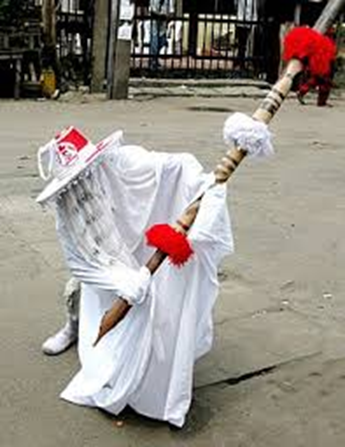
Over the years, the Eyo Festival has strict rules: spectators must remove shoes, hats, and glasses, and cannot use umbrellas or smoke near masquerades; touching or blocking the Eyo (masquerades) is forbidden; photographing sacred Orishas is banned (but Eyo masquerades are okay); and violence, motorcycles, and dark clothing are prohibited to maintain the sacred tradition, with marshals enforcing order, avoid the Shuku hairstyle.
To outsiders, it looks theatrical; To Lagosians, it is deeply spiritual.
By: Olayinka Idris