


Lynch syndrome is a genetic condition caused by inherited mutations in genes responsible for DNA mismatch repair. These genes, most commonly MLH1, MSH2, MSH6, PMS2, and EPCAM, normally fix small errors that occur when cells divide. When they don’t function properly, DNA damage accumulates, increasing the likelihood that cells become cancerous.
The condition follows an autosomal dominant inheritance pattern. This means that a person only needs to inherit one altered gene from a parent to have Lynch syndrome, and each child of an affected parent has a 50% chance of inheriting it.
CANCERS ASSOCIATED WITH LYNCH SYNDROME
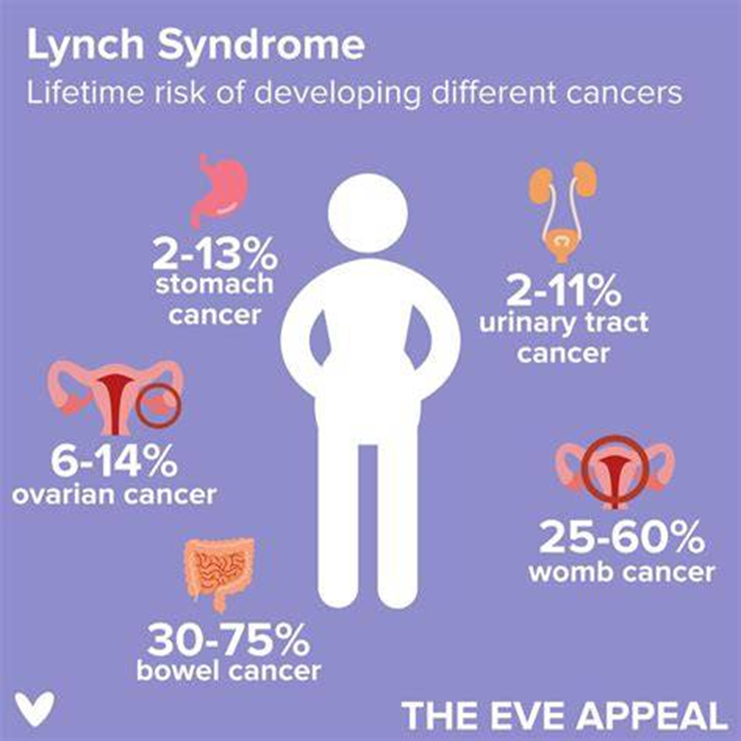
While colorectal cancer is the most well-known cancer linked to Lynch syndrome, it is far from the only one. People with the condition have an increased lifetime risk of several cancers, including:
* Colorectal cancer
* Endometrial (uterine) cancer
* Ovarian cancer
* Stomach cancer
* Small intestine cancer
* Urinary tract cancers (including ureter and kidney)
* Bile duct and gallbladder cancers
* Pancreatic cancer
* Certain brain and skin cancers
Importantly, these cancers often develop earlier than they do in the general population, sometimes before age 50.
SIGNS AND WHEN TO SUSPECT LYNCH SYNDROME

Lynch syndrome itself does not cause symptoms. It is typically suspected based on personal or family history, such as:
* Colorectal or endometrial cancer diagnosed at a young age
* Multiple Lynch-associated cancers in one individual
* Several close relatives with related cancers across generations
Tumor testing after a cancer diagnosis can also suggest Lynch syndrome, prompting genetic counseling and confirmatory genetic testing.
GENETIC TESTING AND DIAGNOSIS
Diagnosis involves genetic testing, usually initiated after referral to a genetic counselor. Testing may be recommended for individuals with certain cancers, strong family histories, or tumor features suggestive of mismatch repair deficiency.
Genetic counseling is a critical step. It helps individuals understand the implications of testing, possible outcomes, and what results may mean for them and their family members.
MANAGING LYNCH SYNDROME
Although Lynch syndrome cannot be cured, its cancer risks can be actively managed. Strategies often include:
* Earlier and more frequent screening, such as regular colonoscopies starting at a younger age
* Risk-reducing surgeries in selected cases, particularly for gynecologic cancers
* Targeted surveillance for other associated cancers based on personal and family risk
* Lifestyle modifications, including attention to diet, physical activity, and smoking avoidance
Lynch syndrome underscores the growing role of genetics in preventive health care. For individuals and families affected, knowledge is not a burden—it is a powerful tool. With appropriate screening, medical guidance, and support, many people with Lynch syndrome live long, healthy lives while staying one step ahead of cancer risk.
If you have a personal or family history suggestive of Lynch syndrome, discussing it with a healthcare provider or genetic counselor can be a crucial first step.
By: Adenola Eniola.