


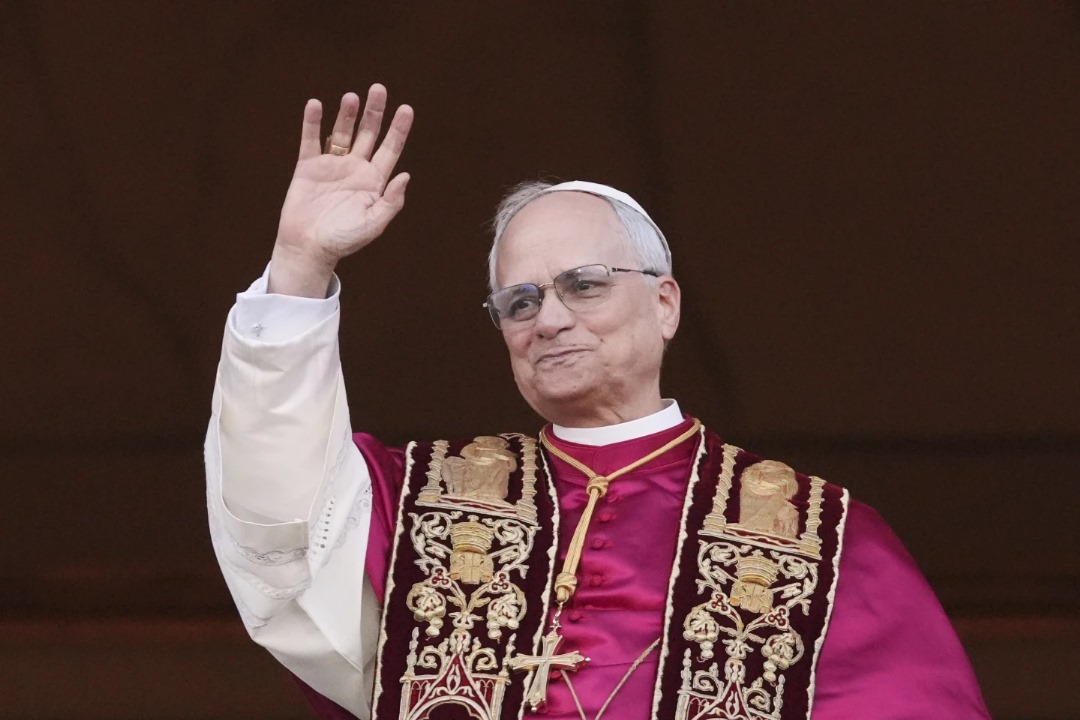
Robert Prevost made history on Thursday by becoming the first pope from the United States, after his name was announced from the balcony of St Peter’s Basilica, the crowds below were chanting “Viva il Papa” – Long live the Pope.
He is the first American to fill the role of pope, although he is considered as much a cardinal from Latin America because of the many years he spent as a missionary in Peru.
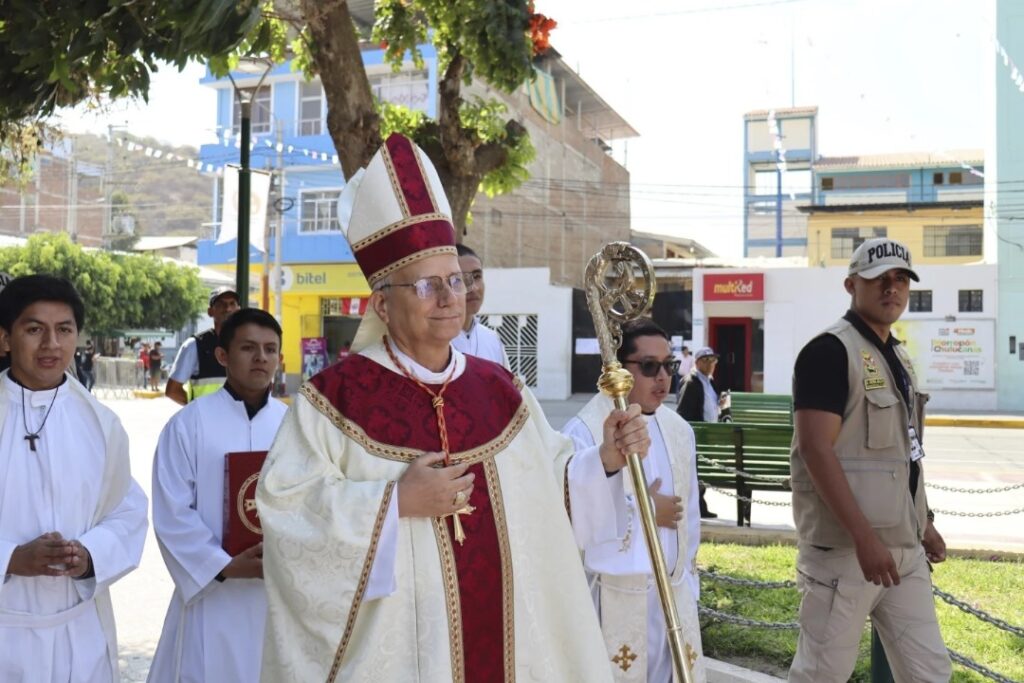
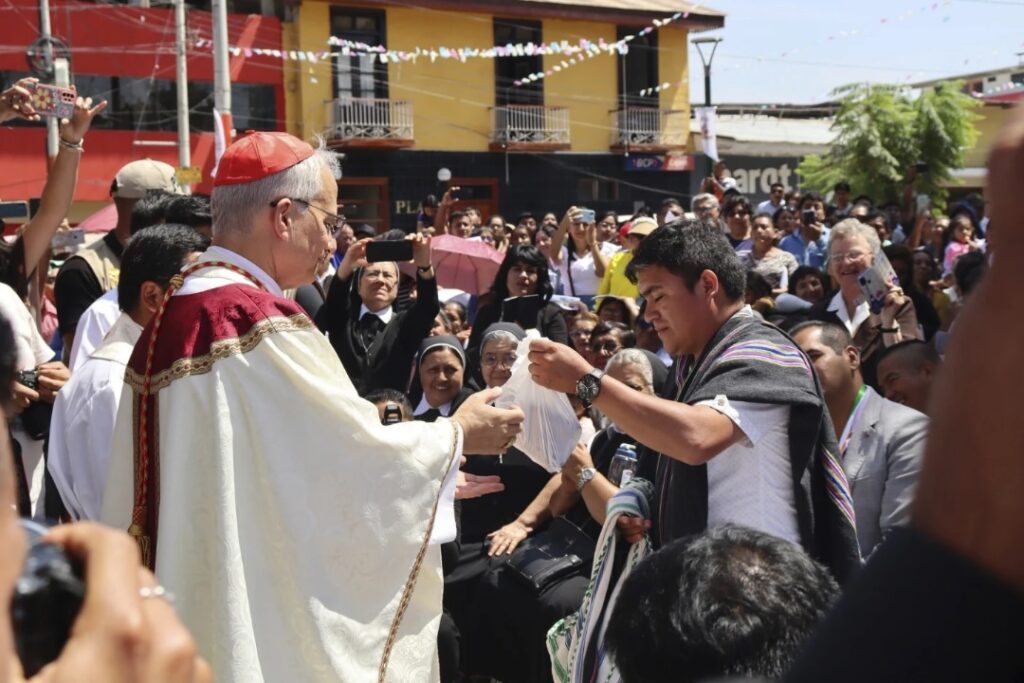
In Peru, he is known as the saintly missionary who waded through mud after torrential rains flooded the region, bringing help to needy people, and as the bishop who spearheaded the life-saving purchase of oxygen production plants during the COVID-19 pandemic.
Before became the 267th occupant of the throne of St Peter and he will be known as Leo XIV.
Born in Chicago in 1955 to parents of Spanish and Franco-Italian descent, Prevost served as an altar boy and was ordained in 1982.
Although he moved to Peru three years later, he returned regularly to the US to serve as a pastor and a prior in his home city.
He has Peruvian nationality and is fondly remembered as a figure who worked with marginalised communities and helped build bridges.
He spent 10 years as a local parish pastor and as a teacher at a seminary in Trujillo in north-western Peru.
In his first words as pope, Leo XIV spoke fondly of his predecessor Francis.
“We still hear in our ears the weak but always courageous voice of Pope Francis who blessed us,” he said.
“United and hand in hand with God, let us advance together,” he told cheering crowds.
He evoked his broad missionary experience in his first public remarks as pope, speaking in Italian, then switching to Spanish — and saying not a word in English as he addressed the crowd in St. Peter’s Square.
“Together, we must try to find out how to be a missionary church, a church that builds bridges, dialogues, that’s always open to receive — like on this piazza with open arms — to be able to receive everybody that needs our charity, our presence, dialogue and love,” he said.
The new pope had prominence going into the conclave that few other cardinals have.
Prevost was twice elected prior general, or top leader, of the Augustinians, the 13th century religious order founded by St. Augustine.
After Francis sent him to Chiclayo, he acquired Peruvian citizenship in 2015, until Francis brought him to Rome in 2023 to assume the bishops’ office and presidency of the Pontifical Commission for Latin America. In that job he would have kept in regular contact with the Catholic hierarchy in the part of the world that counts the most Catholics and presumably was crucial to his election Thursday.
The Rev. Alexander Lam, an Augustinian friar from Peru who knows the new pope, said he was beloved in Peru for his closeness to his people, especially poor people. He said he was a champion of social justice issues and environmental stewardship.
“Even the bishops of Peru called him the saint, the Saint of the North, and he had time for everyone,” Lam said in an interview with The Associated Press in Rome. “He was the person who would find you along the way. He was this kind of bishop.”
He said that when Francis travelled to Peru in 2018, Prevost camped out with his flock on the ground during the vigil before Francis’ Mass. “Roberto has that style, that closeness. Maybe they are not great institutional gestures, but are in human gestures.”
Ever since arriving in Rome, Prevost has kept a low public profile, but he is well known to the men who count.
Significantly, he presided over one of the most revolutionary reforms Francis made, when he added three women to the voting bloc that decides which bishop nominations to forward to the pope. In early 2025, Francis again showed his esteem by appointing Prevost to the most senior rank of cardinals.
The selection of a U.S.-born pope could have profound impact on the future of the U.S. Catholic Church, which has been sharply divided between conservatives and progressives. Francis, with Prevost’s help at the help of the bishop vetting office, had embarked on a 12-year project to rein in the traditionalist tendencies in the United States.
Prevost’s election “is a deep sign of commitment to social issues. I think it is going to be exciting to see a different kind of American Catholicism in Rome,’’ said Natalia Imperatori-Lee, a professor of religious studies at Manhattan University in New York City.
The bells of the cathedral in Peru’s capital of Lima tolled after Prevost’s election was announced. People outside the church expressed their desire for a papal visit at one point.
“For us Peruvians, it is a source of pride that this is a pope who represents our country,” said elementary school teacher Isabel Panez, who happened to be near the cathedral when the news was announced. “We would like him to visit us here in Peru.”
The Rev. Fidel Purisaca Vigil, the communications director for Prevost’s old diocese in Chiclayo, remembers the cardinal rising each day and having breakfast with his fellow priests after saying his prayers.
“No matter how many problems he has, he maintains good humor and joy,” Purisaca said in an email.
—BBC, AP
Leave a Reply