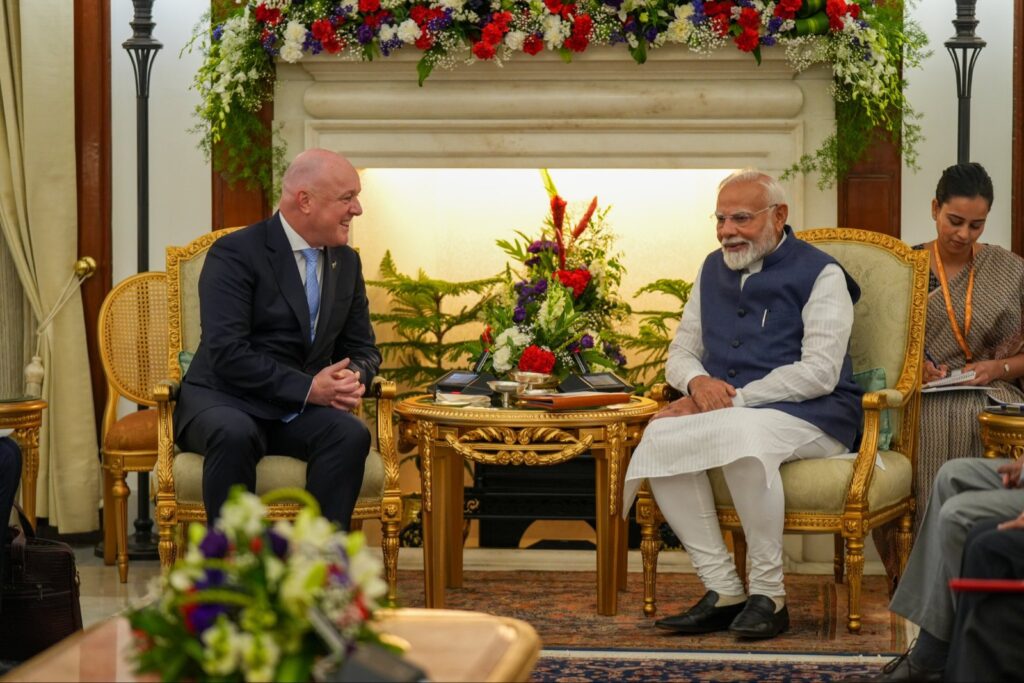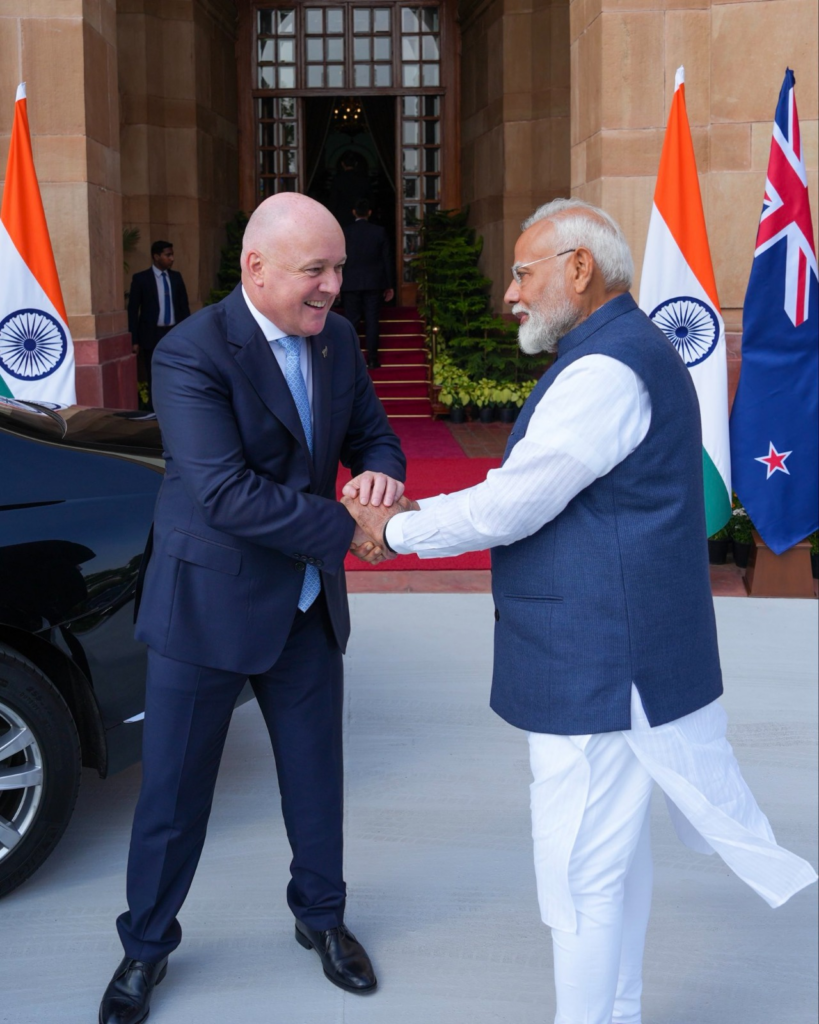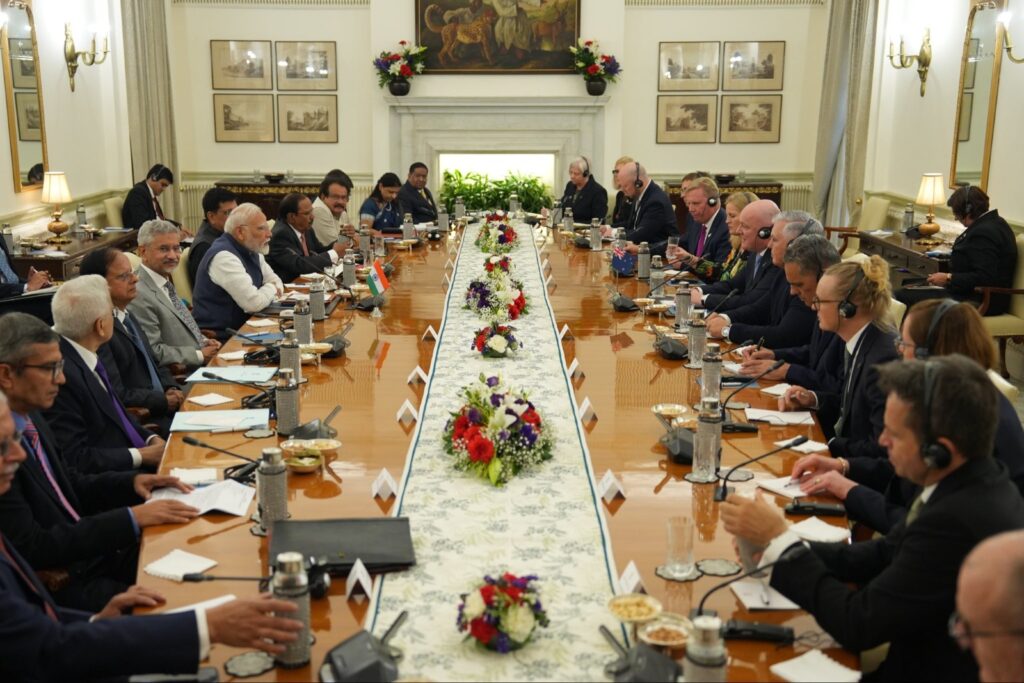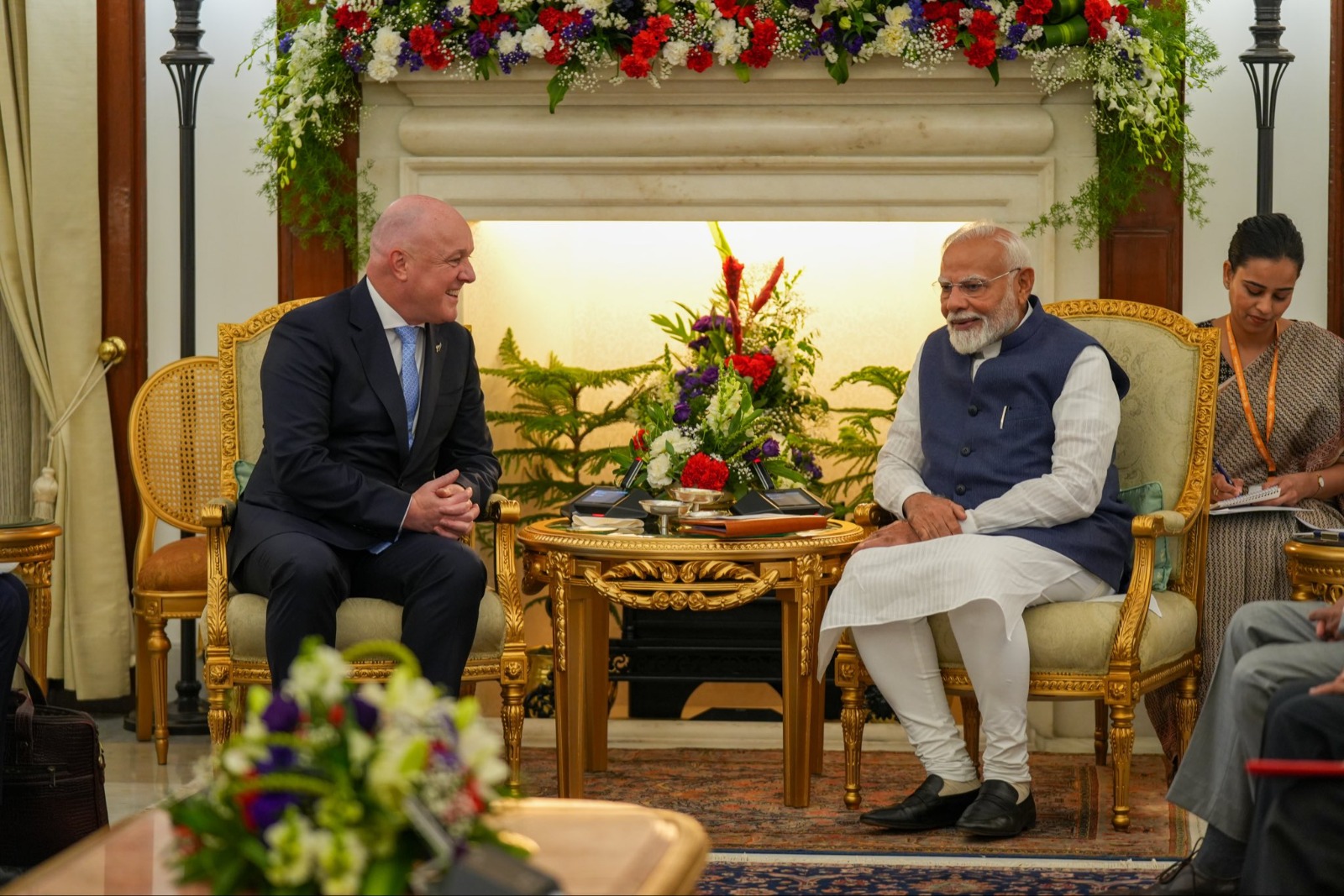
On April 27, 2026, New Zealand and India formally signed a Comprehensive Free Trade Agreement (FTA) in New Delhi, concluding 16 years of negotiations.
The deal grants 100% duty-free access for Indian goods into New Zealand, reduces tariffs on 95% of New Zealand exports, and aims to boost bilateral trade to $5 billion.
Prime Minister Christopher Luxon wrote in a post: “Just over a year ago, I met with Prime Minister Modi in India.
“We agreed then, that we’d launch negotiations on a free trade agreement. For decades, many people said it couldn’t be done. But tonight, that deal gets signed.
“This is a once-in-a-generation agreement that gives NZ exporters unprecedented access to 1.4 billion people and an economy set to become the third-largest in the world.
“It means more jobs on farms and orchards, it means more money coming into local communities, and it means more opportunities for your family to get ahead.”
Key aspects of the agreement include:
Investment Boost: A commitment to stimulate US$20 billion in new investment over 15 years.
Market Access: New Zealand gains improved access for dairy, forestry, and high-value food products, while India gains better access for IT services, textiles, and pharmaceuticals.
Support & Services: A dedicated “New Zealand Investment Desk” will be established in India to facilitate investment.
Organic Products: An interim mutual recognition arrangement (IMRA) will allow for two-way trade in organic products.
The agreement is part of India’s rapid expansion of trade pacts with key partners, aiming to deepen ties with the world’s fifth-largest economy.