


By Ibidunni Doyinsola
The 2026 FIFA World Cup has increasingly been branded a political fiasco. FIFA constantly repeats its famous phrase, “Keep politics out of football,” yet the organisation now appears to have forgotten its own words. FIFA only seems to remember that slogan when it suits its interests.
The build up to the tournament has already been filled with controversies, with the host nation, the United States of America, behaving in ways rarely seen from a World Cup host. Since I began watching the FIFA World Cup in 2010, I cannot remember a tournament surrounded by this level of immigration controversy before a ball has even been kicked.
Several disturbing incidents have already taken place ahead of the competition.
Switzerland striker Breel Embolo faced visa issues and could only join his team days later.
Iraq striker Aymen Hussein was reportedly questioned for almost seven hours after arriving in the United States.
Iran spent days dealing with visa problems before the World Cup, with fifteen members of their delegation denied visas.
South Africa also arrived much later than planned because some members of their delegation could not secure visas.
Senegal staff members were subjected to lengthy searches and forced to remove their shoes, leading to accusations of racism.
Uzbekistan’s national team was searched with bomb sniffing dogs, with videos spreading widely across social media.
Some Scotland supporters reportedly had their ESTA travel authorisations cancelled just days before departure.
Many ordinary football fans who had already bought match tickets and booked hotels had their visa applications rejected, causing them to lose significant amounts of money.
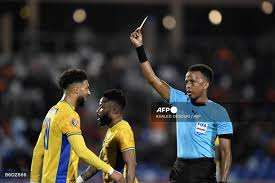
However, the incident that stands out the most involves CAF’s 2025 African Referee of the Year, Omar Abdulkadir Artan, who was denied entry into the United States and sent back home. FIFA later confirmed that he would miss the tournament entirely.
The decision sparked outrage across the football world. When pressured to comment on the matter, FIFA released what many viewed as an embarrassing statement:
“FIFA is not involved in host country immigration processes, including visa adjudications, and has been informed by authorities that Mr Artan’s status will not be changed at present.
“In line with previous FIFA events, a host government ultimately determines who receives a visa and who is admitted into their country.”
The statement directly contradicts comments previously made by FIFA president Gianni Infantino.
In August 2025, Infantino dismissed concerns surrounding visas and entry restrictions ahead of the tournament:
“I think it’s important to clarify this. There is a lot of misconception out there. Everyone will be welcome in Canada, Mexico and the United States for the FIFA World Cup next year.
“There is a process to go through to get visas and so on. This process will be smooth…
“We want to unite the world and we will unite the world next year. The world needs occasions of unity, of bringing teams together, of bringing people together, of bringing fans together… So again everyone will be welcome, be positive and you will see it will be a great, great celebration of the greatest FIFA World Cup ever.”
Even more interesting are comments Infantino made back in 2017 during discussions surrounding the 2026 World Cup bidding process, particularly regarding travel bans in the United States at the time.
“Teams who qualify for a World Cup need to have access to the country, otherwise there is no World Cup. That is obvious.
“We are now in the process of defining the bid requirements. In the world there are many countries who have bans, travel bans, visa requirements and so on and so forth. It’s obvious when it comes to FIFA competitions, any team, including the supporters and officials of that team, who qualify for a World Cup need to have access to the country, otherwise there is no World Cup.
“The requirements will be clear. And then each country can make up their decision, whether they want to bid or not based on the requirements.”
Those statements now look completely hollow.
FIFA’s position has clearly shifted depending on political convenience.
In 2023, FIFA stripped Indonesia of its hosting rights for the FIFA U20 Men’s World Cup after Indonesian political and religious figures refused to host Israel because of it’s genocide against Palestine. FIFA acted swiftly in that situation. Yet many critics believe the organisation has turned a blind eye to Israel while previously banning Russia from football competitions.
That inconsistency is exactly why many football fans now accuse FIFA of selective morality.
The controversy surrounding Omar Artan became even more explosive when the head of the White House Task Force for the World Cup claimed Artan was “associated with suspected members of terrorist organizations,” therefore “making the traveler ineligible for admission to the United States.”
The statement provided no public evidence and only intensified criticism.
If Artan was genuinely linked to terrorism, many questioned why he was simply sent back home instead of being arrested or formally charged. To many observers, the situation looked less like a security issue and more like discrimination and political profiling.
Mowliid Haji Abdi, CEO of Horn Broadcasting Network, revealed the opinion of a legal expert :
:
“Omar Artan should take steps to clear his name and protect his reputation. He should consult experienced attorneys and consider filing a legal case against the U.S. Department of Homeland Security and the relevant immigration authorities. It is possible that someone with a similar name is on a list of individuals barred from entering the United States. If it turns out that he was wrongly denied entry due to an administrative or identification error, he could have strong grounds to seek compensation and a formal apology.”
Public calls from football figures and Somali officials have urged FIFA to support Artan more strongly, arguing that his exclusion stems entirely from a political decision by the host country rather than any professional wrongdoing.
As criticism intensified, Gianni Infantino was mocked publicly by many football fans, with some branding him “Donald Trump’s puppet.”
Another disappointing aspect of the situation has been CAF’s silence. Omar Artan belongs to CAF, yet the continental body failed to publicly defend one of its own officials.
That silence has only strengthened accusations that CAF lacks independence and remains heavily controlled by powers in Zurich rather than acting in the interests of African football.
Journalist Osasu Obayiuwana revealed that he spoke with a senior CAF official regarding the matter.
“We are in conversation with FIFA over this matter.”
When asked whether CAF would issue a public statement supporting Artan, the official reportedly replied:
“We are engaging in quiet diplomacy. Shouting in public could make things a lot worse.
“This is a FIFA matter, not a CAF affair. We have no blame in this matter.”
For many Africans, that response sounded weak, passive and deeply disappointing.
The lack of public solidarity from CAF and even fellow referees has been painful to watch. In an ideal football world where principles truly mattered, there would have been open support for Artan.
The reality is that referees often spend close to twenty years climbing through the ranks before receiving an opportunity to officiate at a FIFA World Cup. You can become a brain surgeon in less time. History also suggests Artan may never get another opportunity again.
Speaking to The New York Times, Omar Artan revealed he was questioned for eleven hours before ultimately being denied entry into the United States.
“I am just a referee trying to live my biggest dream: going to the World Cup. I am really, really disappointed. I had the correct documents and the correct visa. I think they have a problem with my country.”
Despite the humiliation, Artan returned safely to Mogadishu, where he received a hero’s welcome. Huge crowds reportedly gathered at the airport to welcome him home.
A Somali businessman even offered him $100,000 as compensation after the disappointment of missing the World Cup.
What stands out most is that while FIFA and CAF appeared unwilling to strongly defend him publicly, Artan himself remained remarkably diplomatic after arriving home.
“First of all, I sincerely thank the leaders and the entire sports family of Somalia.
“I want to express my gratitude to the Somali people for their unwavering support, encouragement and solidarity.
“I also appreciate the government, the Minister of Youth and Sports, and the President of the Somali Football Federation for their support behind the scenes.
“My thanks also go to FIFA and CAF for standing by me throughout this journey. They never left me alone.
“Insha Allah, I promise you all that I will be at the next FIFA World Cup in 2030. I will return stronger and better prepared.
“I will continue to work hard, carry the Somali flag with pride and I will never give up.”
Omar Abdulkadir Artan would have been one of the youngest referees at the 2026 FIFA World Cup and the first Somali referee ever selected to officiate at the tournament.
Instead, his dream ended at an airport.
The entire controversy has exposed uncomfortable truths about modern football governance. FIFA constantly speaks about unity, equality and inclusion, yet when political interests collide with football principles, those values suddenly become negotiable.
The organisation that endlessly demands politics stay out of football now appears completely comfortable when politics serves its own interests.
That is why many fans no longer believe FIFA’s words.